
Runoff Directed Away From Vulnerable Areas
Downspout Installation and Repair in Panama City for moving collected roof water to appropriate discharge points around your property
Downspouts are the vertical drainage components that carry collected roof water from gutters to ground-level discharge points positioned away from foundations, walkways, and landscaping where uncontrolled runoff causes erosion, flooding, and structural moisture problems. Damaged downspout sections, loose connections between components, inadequate placement that discharges water too close to vulnerable areas, and restricted flow from clogs or collapsed segments all prevent roof runoff from reaching safe discharge locations during storms. Installation and repair services address these problems by adding downspouts where drainage is insufficient, replacing damaged sections, securing loose connections, and clearing restrictions that block water movement through the vertical runs.
Effective downspout performance matters particularly during the intense rain events common across Northwest Florida, when large volumes of roof water must move through the gutter system and exit at controlled points within seconds or minutes. One downspout typically handles drainage for thirty to forty feet of gutter depending on roof area and pitch, meaning properties with long gutter runs or complex rooflines may need additional downspouts to prevent overflow during heavy rainfall.
Arrange a property assessment to identify downspout needs based on your roof configuration and drainage challenges.
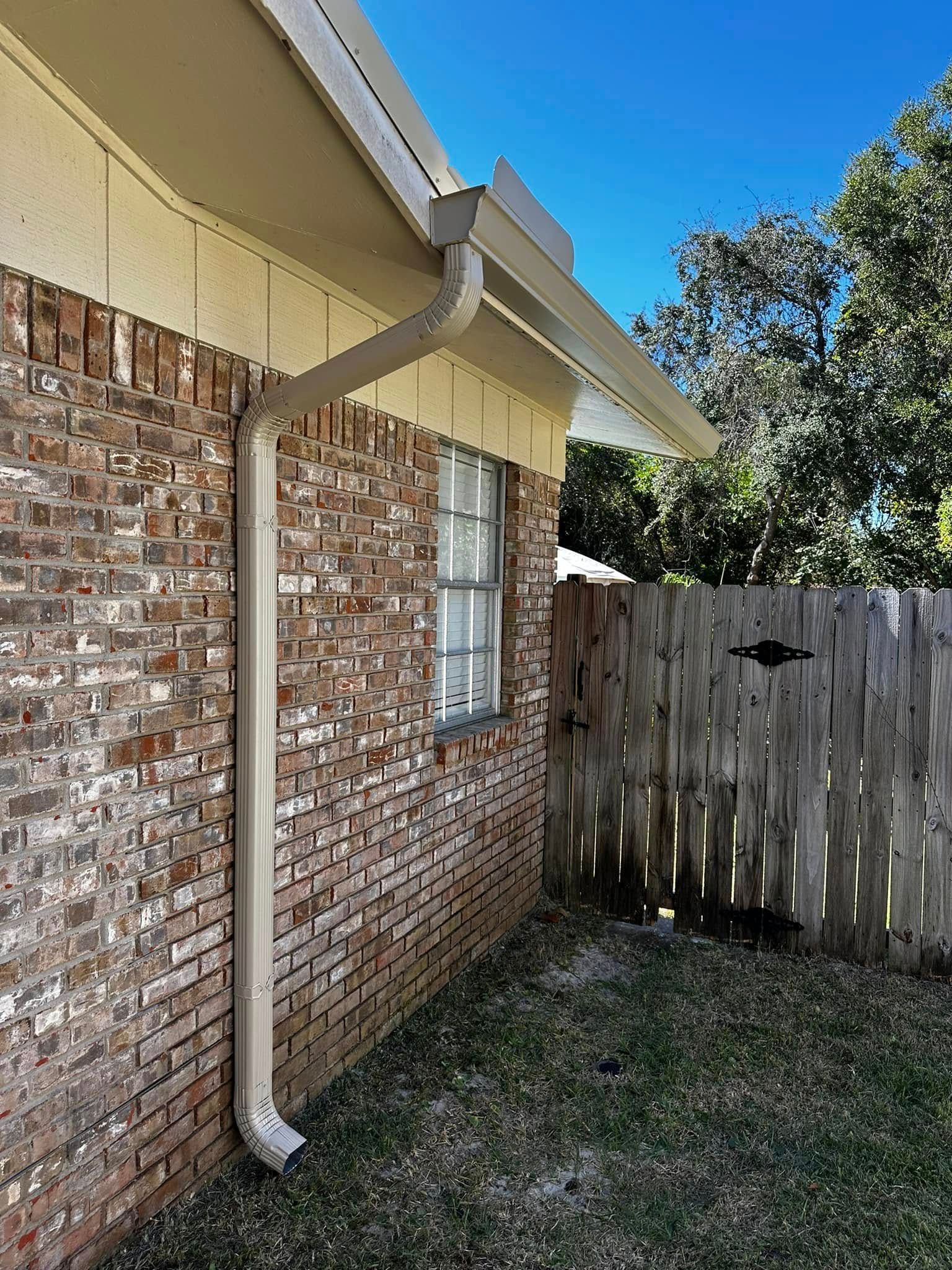

The Difference Between Adequate and Inadequate Placement
Installation involves positioning downspouts where gutter outlets can be placed, routing vertical sections along exterior walls or corners, and terminating at discharge points that direct water away from foundations and high-traffic areas without creating erosion or flooding elsewhere on your property. Repair work includes replacing damaged elbows, reattaching loose sections, clearing blockages caused by debris or nests, and adjusting discharge placement when water exits too close to vulnerable areas.
After installation or repair, roof water collected in gutters flows through downspouts and exits at ground level several feet from your foundation instead of pooling against basement walls or saturating crawl space perimeters. You'll notice soil erosion stops along foundation lines, basement moisture problems decrease during storms, and landscaping beds near the house no longer flood with concentrated runoff that was overwhelming a single inadequate discharge point.
Service includes assessment of current downspout placement, installation of additional downspouts where needed for capacity, repair or replacement of damaged sections, and basic discharge positioning to move water away from structures. Underground drainage extensions, french drains, and modifications to site grading are separate scopes that can be coordinated if your property requires more extensive runoff management beyond the downspout discharge point.
What Property Owners Usually Ask
Questions about downspouts often focus on how many are needed for proper drainage, where water should be directed, and what problems indicate downspout issues rather than other gutter system failures.
How many downspouts does a home need?
Most homes require one downspout for every thirty to forty feet of gutter run, though total roof area, gutter size, and rainfall intensity in Panama City mean some properties need closer spacing to prevent overflow during storms that dump several inches of rain in short periods.
Where should downspouts discharge water?
Downspouts should discharge at least four to six feet from foundations to prevent water from saturating soil around basement walls or crawl space perimeters, and discharge points should direct runoff away from walkways, driveways, and landscaping beds that erode or flood under concentrated flow.
What causes downspouts to become blocked?
Leaves, pine needles, nests, and debris that wash into gutters accumulate at downspout inlets and inside vertical runs, creating clogs that prevent water from exiting the system, while improper discharge termination allows sediment to build up and block the outlet from ground level.
Why does water overflow gutters even when downspouts are clear?
Gutters with too few downspouts cannot drain fast enough during heavy rain regardless of whether individual downspouts are clear, causing water to back up and spill over gutter edges before it can reach the limited number of available outlets.
Can downspouts be relocated?
Downspouts can be repositioned if gutter outlet placement allows, though relocation requires patching the old outlet, cutting a new outlet in the gutter run, and routing vertical sections to a more appropriate discharge location that moves water away from problem areas.
A+ Seamless Gutters LLC evaluates your current downspout configuration, identifies where additional capacity or repairs are needed, and provides installation or repair estimates that address your specific drainage concerns. Schedule an inspection and estimate to resolve downspout problems directing runoff where it should not go.